

Introduction
Imagine a horse that lived through the Napoleonic Wars and the Industrial Revolution. Or a horse that lived for not 1, not 2, but 3 generations! That’s not fiction. That’s Old Billy, the oldest horse ever recorded at the astonishing age of 62 years. For example, a domestic horse lasts between 25 and 30 years on average. Old Billy didn’t just beat the odds; he knocked them down. He lived for 62 years!
I’m a huge fan of animal history and equine care, and yes, the wisdom some quietly good horses seem to carry, so I’ve always liked stories like Old Billy’s. They’re not curiosities, they serve as windows into how environment, genetics, and human care affect longevity. In this post, we’ll explore: Old Billy the horse’s story is also the true story. The reason most horses never live past 30 years? What modern science says about equine aging. Practical strategies to help your horse live a longer, healthier life. You’re in for a treat, whether you’ve been an equestrian for ages, are a history enthusiast, or just a fan of legendary animals.
Who Was Old Billy?
Old Billy was born in 1760 in Woolston, Lancashire, now part of Greater Manchester, England. And he was a barge horse, a working breed that was used to drag canal boats along England’s expanding waterways. Barge horses lived tough, laborious lives, rather than modern luxury show horses or racehorses. But Old Billy made his way through.
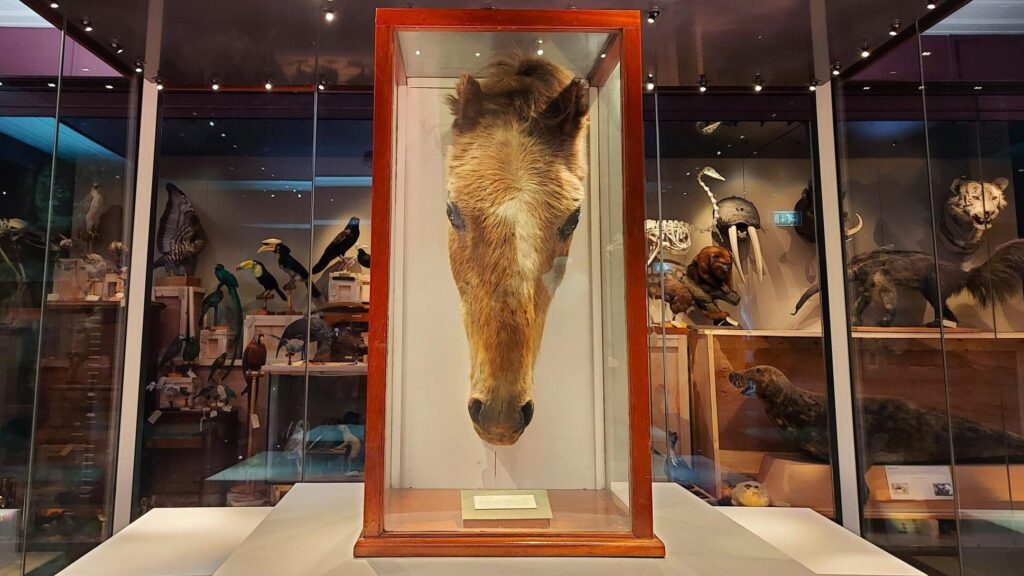
He continued to work until he was 59, retired for three years, and died in 1822. His skull and taxidermied head are in museums such as the Manchester Museum and the Booth Museum of Natural History in Brighton, a silent record of a wonderful life.
“Old Billy’s living for over 60 years is not only an exceptional feat but also a scientific milestone,” states Dr. Jane Williams, a horse age expert at the University of Liverpool, “He is certified through historical records and physical evidence as one of the very few horses to have lived that long, although anecdotal claims of such existence do exist.”
Why Do Horses Not Reach This Age Most of the Time?
If Old Billy survived to 62, then why are horses today considered to be 30 already past their age of retirement? A number of things can be mentioned that explain this discrepancy:
- 1. Breed and Genetics Old Billy, the draft horse, believed to be a mix of Shire and Cob, would be the perfect example of a horse with a longer life span. This is because the draft horses usually have slower metabolisms and more massive bodies, which might be the reason for the extra years. On the contrary, high-performance breeds like Thoroughbreds are bred for their speed, and that in turn means they go through more training sessions, are subjected to more physical stress, and, thus, are harder on their bodies.
- 2. Work vs. Lifestyle To an extent Old Billy’s work might have been one of the factors behind his long life. Nowada,ys horses are subjected to training, travelling, and competing, all of which have a negative impact on their bodies, leading to an earlier wear and tear of joints and organs. On the other hand, a horse doing a consistent moderate activity like pulling a barge at walking pace would still be active, keeping cardiovascular health intact, without being overworked.
- 3. Veterinary Care: Then vs. Now People tend to think that modern horses would have long lifespans due to the availability of better veterinary care, but it is not so straightforward. On the positive side, horses are now being given proper dental and diagnosis treatment, as well as being better controlled for parasites. But the downside is that many old horses die by euthanasia because their quality of life has declined due to ailments (e.g., laminitis, colic, or arthritis), and they have not been documented or managed as effectively as in the 1800s.
A statement from the American Association of Equine Practitioners (AAEP) claims that putting the horse ona senior diet, dental care, and nutrition has led to the survival of horses into their 30s—but still, 62 years is a rare phenomenon.
What can the Present Learn from Old Billy the horse?
There is no doubt that the life span of Old Billy cannot be retraced, his tale still brings along to horse owners the following pointers that cannot be neglected:
- ✅ Preventive care should be the main focus. After the age of 15, get your vet to check the mare twice a year Be sure that the mare’s teeth are regularly cleaned to avoid malnutrition caused by that (also feeding horses with uneven teeth is difficult). Take tests for PPID (Cushing’s disease) and equine metabolic syndrome, seniors are the populations that are most affected by this diseases.
- ✅ Change the Horse’s Diet according to Age It is frequently the case that senior horses have a problem with nutrient absorption. One can possibly envisage Feeds that are less processed, rich in fiber and thereby easy to digest Minerals and vitamins (especially E and C for immune support) added Hay that is soaked or hay cubes are provided for horses that have difficulties with their teeth
- ✅ Maintain Movement—Gently Low-impact exercises like hand-walking or light riding help to keep in good condition the circulation and flexibility of the joints. Equine physiotherapist Mark Reynolds states: “Motion is lotion. Daily movement even benefits some 30-year-old horses – just not Grand Prix jumps though.”
- ✅ Offer Emotional Enrichment Horses are very sociable animals. Being alone brings on faster deterioration of mental faculties. Let your old horse have a friend be it another horse, goat or even a calm dog.
Busting Myths about a horse:
Widely Held but Untrue Ideas about Horse Longevity Let’s dispel a few myths:
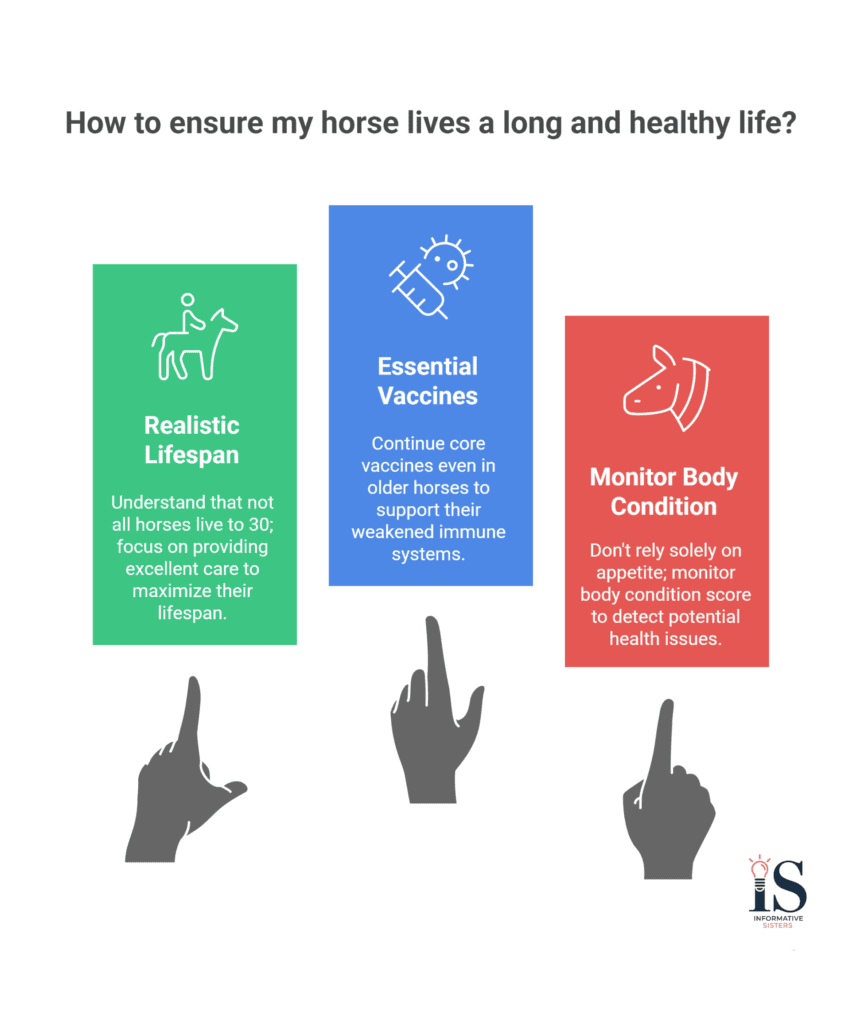
- ❌ “Every horse will see its 30th birthday.” → Fact: The great majority will not even make it to 25, notably the performance horses or those that are not well taken care of.
- ❌ “Immunizing older horses is unnecessary.” → Incorrect. The immunity of the body fails as one ages—therefore the need for core vaccines is a must.
- ❌ “A horse’s eating tells its health status.” → Not at all. Horses that are suffering from dental diseases may be eating but they are in fact losing weight or being malnourished. Always keep your eye on the body condition score.
Conclusion
Giving Respect to Longevity with Better Care The 62 years of Old Billy are a reminder that a horse may live beyond its expectations if a combination of right genes, gentle work, and consistent care along with perhaps a bit of luck is used. Although we may never see the same lifespan again, we can still learn a lot from Old Billy’s life by improving our care of horses.
Want to keep going?Click here