


Introduction
A typical domestic horse lives between 25 and 30 years. Old Billy lived to 62. That’s not a typo — he’s the oldest horse ever reliably recorded, and his life spanned the Napoleonic Wars, the early Industrial Revolution, and three generations of change in England.
Stories like his aren’t just curiosities. They’re useful windows into how genetics, lifestyle, and care shape an animal’s lifespan. In this post, we’ll cover who Old Billy actually was, why most horses never come close to his age, and what his story can teach modern horse owners about longevity.
Who Was Old Billy?
Old Billy was born in 1760 in Woolston, Lancashire — now part of Greater Manchester, England. He was a barge horse, bred and worked to pull canal boats along England’s expanding waterway network. It wasn’t a glamorous life. Barge horses worked hard, at a steady pace, day after day.
Old Billy kept working until he was 59, retired for three years, and died in 1822. His skull and taxidermied head are preserved today at the Manchester Museum and the Booth Museum of Natural History in Brighton — physical evidence of an extraordinary life.
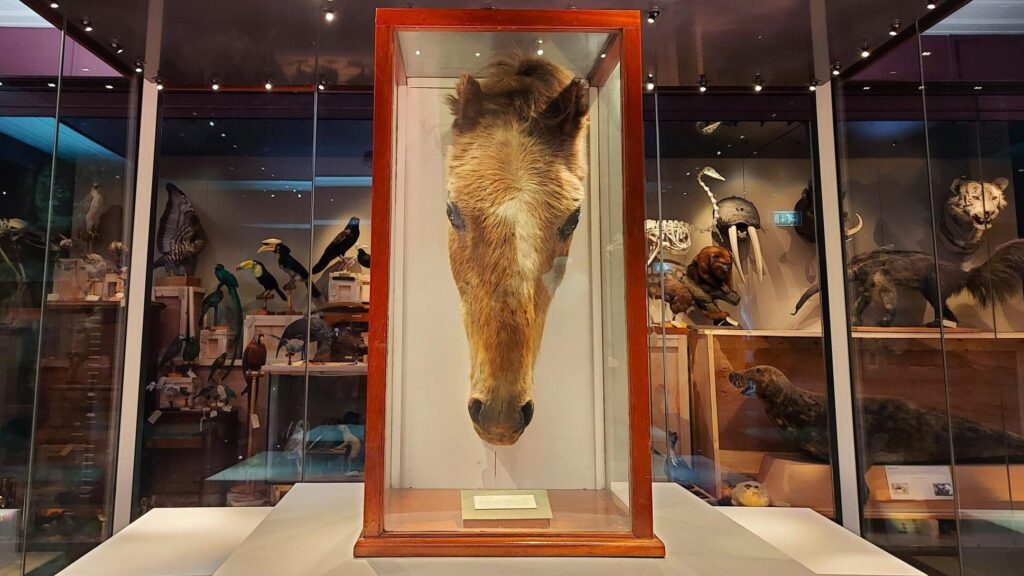
Living past 60 isn’t just an unusual feat — it’s a genuine outlier in horse biology. Historical records and physical evidence support Old Billy’s age, making him one of the very few horses whose extreme longevity is actually documented rather than anecdotal.
Why Don’t Most Horses Live This Long?
If Old Billy made it to 62, why do most horses today retire well before 30? A few factors explain the gap.
Breed and genetics. Old Billy was likely a draft horse, probably a Shire-Cob mix. Draft breeds tend to have slower metabolisms and larger, sturdier bodies, both linked to longer lifespans. High-performance breeds like Thoroughbreds, by contrast, are bred for speed and endure more intense training and physical stress, which wears on the body over time.
Type of work. Old Billy’s job may have actually helped him. Pulling a barge at a steady walking pace kept his cardiovascular system active without overworking his joints. Modern competition horses, by comparison, face intense training, travel, and repeated physical strain — all of which accelerate wear on joints and organs.
Veterinary care, then and now. It’s tempting to assume modern horses should live longer thanks to better veterinary care — and in some ways, they do benefit from improved dental treatment, diagnostics, and parasite control. But many older horses today are euthanized once conditions like laminitis, colic, or arthritis seriously reduce their quality of life — outcomes that simply weren’t tracked or managed the same way in the 1800s.
Better senior nutrition, dental care, and general management have helped many horses live into their 30s in recent decades. Even so, a lifespan like Old Billy’s remains extremely rare.
What Horse Owners Can Learn From Old Billy
You can’t recreate Old Billy’s exact circumstances, but his story points to a few practical takeaways for horse owners today.
- Prioritize preventive care. After age 15, schedule vet checkups twice a year. Keep teeth cleaned regularly, since dental problems make it hard for horses to eat properly. Ask about testing for PPID (Cushing’s disease) and equine metabolic syndrome, both more common in senior horses.
- Adjust the diet with age. Senior horses often struggle to absorb nutrients as efficiently. Less-processed, fiber-rich, easy-to-digest feed helps, along with added vitamins E and C for immune support. Soaked hay or hay cubes work well for horses with dental trouble.
- Keep them moving, gently. Low-impact activity like hand-walking or light riding supports circulation and joint flexibility. Daily movement benefits even older horses — it just needs to match their current condition.
- Don’t overlook social needs. Horses are herd animals, and isolation can speed up both physical and mental decline. A companion — another horse, a goat, even a calm dog — makes a real difference.
Common Myths About Horse Longevity
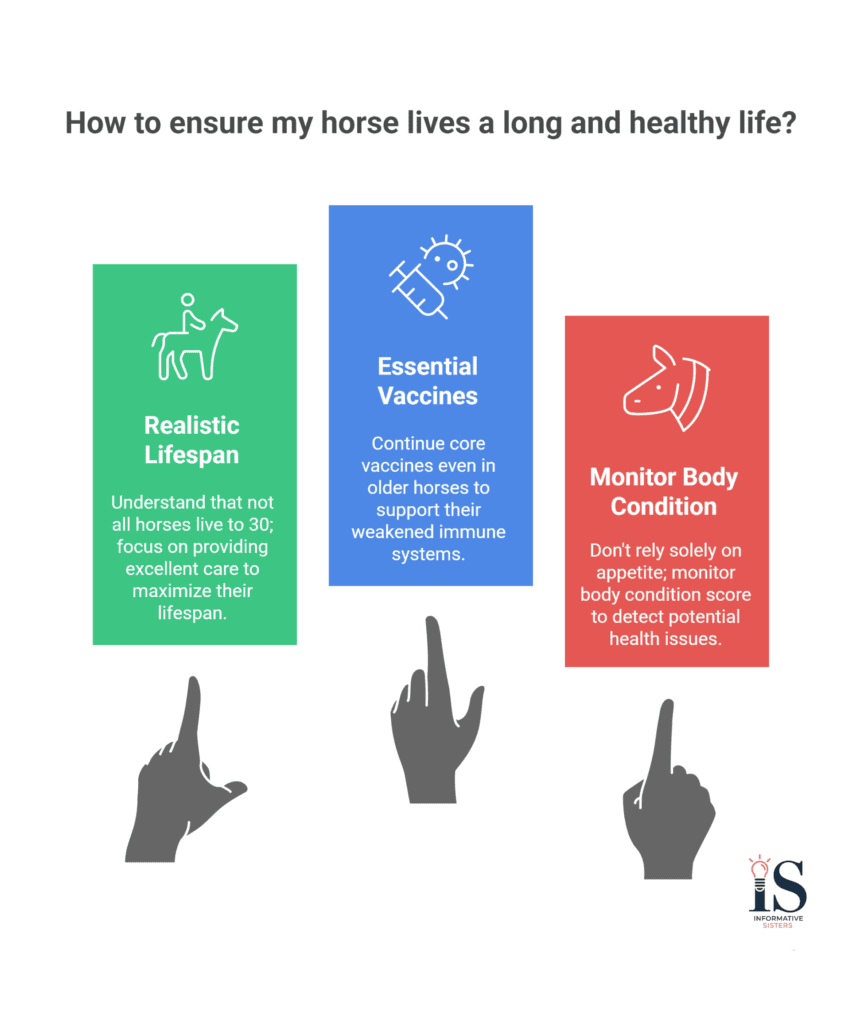
- “Every horse will see its 30th birthday.” Not true. Most horses don’t reach 25, particularly performance horses or those without consistent care.
- “Older horses don’t need vaccinations.” Also not true. Immune function declines with age, which makes core vaccines more important, not less.
- “If a horse is eating, it’s healthy.” Not necessarily. Horses with dental disease can keep eating while still losing weight or becoming malnourished. Tracking body condition score is a better indicator than appetite alone.
Conclusion
Old Billy’s 62 years are a reminder that with the right genetics, steady (not overly strenuous) work, consistent care, and a bit of luck, a horse can far outlive what’s typically expected. We may never see a lifespan like his again, but his story still offers real, practical lessons for anyone looking to help their own horse live a longer, healthier life.
Want to keep reading? Browse our Science category for more.