

Introduction
I used to think of space as empty. Vast, silent, nothing up there but stars and the occasional satellite doing its quiet orbit. Then I started following rocket launches for this blog, and that picture fell apart fast. Space isn’t empty — it’s getting crowded, and some of what’s cluttering it up there has already found its way somewhere you wouldn’t expect: the Moon.
This post connects two stories that are really one story. First, what’s actually orbiting Earth right now — it’s not just satellites, it’s space debris. Second, what happens when a piece of that space debris doesn’t burn up or float harmlessly forever — it drifts all the way to the Moon and hits it.
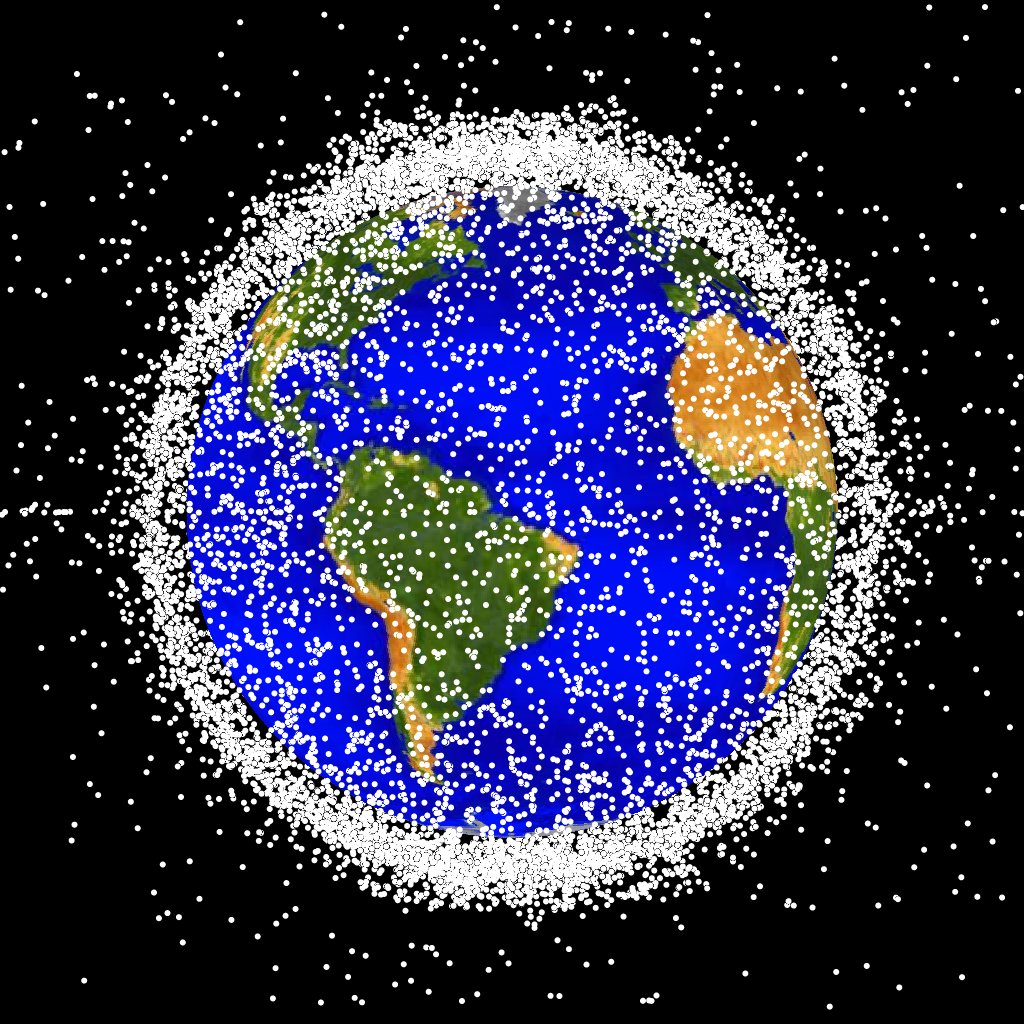
How Crowded Is Earth’s Orbit With Space Debri?
Ground-based radar and optical sensors — mostly run by the U.S. Space Surveillance Network — currently track close to 30,000 objects larger than about 10 cm in Earth orbit. That number includes active satellites, dead ones, spent rocket stages, and fragments from old collisions and explosions.
That’s just what’s big enough to see. Estimates put the population of debris between 1 and 10 cm at over a million pieces, and fragments smaller than 1 cm — still capable of damaging a spacecraft at orbital speeds — likely number in the hundreds of millions.
To put the danger in perspective: objects in low Earth orbit travel at roughly 7 to 8 km per second. At that speed, even something as small as a paint fleck can chip a window on the International Space Station. A fragment the size of a marble can be catastrophic.
Why It’s Getting Worse, Not Better
Mega-constellations are a big part of the story. SpaceX’s Starlink alone has launched thousands of satellites, with approval for tens of thousands more. Other companies and countries are racing to do the same. Most of these operate low enough that atmospheric drag eventually pulls them back down — but while they’re up there, they add real collision risk, especially in the busiest altitude bands.
When Space Debri Come Back Down
Most debris that re-enters Earth’s atmosphere burns up before it ever reaches the ground — friction with the air does the work for us. It’s one of the few genuine safety nets our planet has that the Moon simply doesn’t.
Which brings us to the second half of this story.
The Day a Space Debri Hit the Moon
In March 2022, astronomers tracking a piece of space junk confirmed something that had never definitively happened before: a discarded rocket stage, drifting through space since 2015, was on a collision course with the Moon — and nobody was steering it.
A Mystery With Two Craters
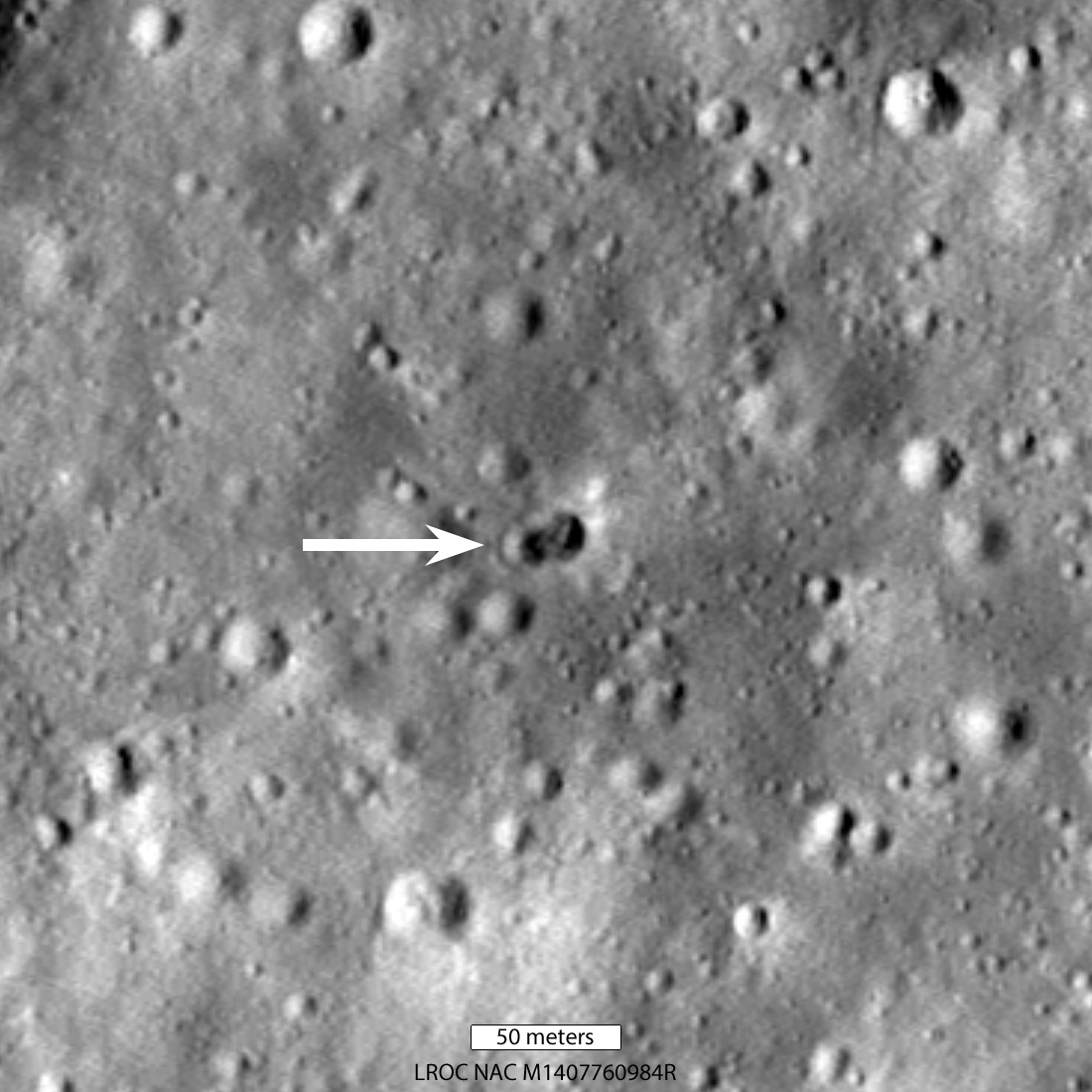
When it hit the Moon’s far side inside the Hertzsprung crater, NASA’s Lunar Reconnaissance Orbiter later photographed the impact site and found something odd — not one crater, but two, overlapping and roughly 28 meters wide combined. Scientists eventually traced the debris to the spent upper stage of China’s Chang’e 5-T1 mission, likely carrying an undisclosed extra payload that explains the unusual double-crater shape. China has disputed the identification, and to this day the full story of exactly what hit the Moon that day isn’t settled.
It’s Happened Again Since
This isn’t a one-off. In August 2026, the upper stage of a SpaceX Falcon 9 rocket — estimated at around 4,000 kilograms and traveling at more than 5,000 miles per hour — collided with the Moon in another uncontrolled impact, this time near Einstein Crater. NASA tracked the object’s trajectory in advance and confirmed the impact site afterward for scientific study.
Why the Moon Doesn’t Forget
Here’s the part that makes this different from Earth: the Moon has no atmosphere. Nothing burns up on the way down. Every impact — accidental or intentional — leaves a permanent mark. Space archaeologists have started referring to this pattern as a kind of “Anthropocene bombardment” on the lunar surface: a layer of human-made craters mixed in with billions of years of natural ones.
There’s a silver lining, of sorts. Because we know the mass and speed of these rocket bodies, studying the resulting craters helps scientists understand the Moon’s surface composition and impact history in ways natural meteorite strikes — where the impactor’s exact properties are unknown — can’t offer.
What This Means for Future Lunar Missions
As more countries and companies plan crewed and robotic missions to the Moon, this stops being a curiosity and starts being a planning problem. There’s currently no formal system for tracking debris once it leaves Earth’s immediate orbit — pieces like the Chang’e 5-T1 stage were found almost by accident, through surveys built to watch for hazardous asteroids, not junk. As lunar traffic increases, that gap becomes harder to ignore.
Final Thoughts
What struck me most researching this is how the story of space debris isn’t really two separate problems — a crowded orbit around Earth, and a growing scatter of craters on the Moon. It’s one long trail, starting the moment we launch something and not really ending until it either burns up, drifts forever, or finds something solid enough to stop it.
Want to explore more? check out this link