

Every year, a handful of ordinary people end up in situations that should have killed them. A plane goes down in the mountains. A boat sinks in the middle of the ocean. A rock shifts half a ton onto someone’s arm in a canyon nobody visits. These survival stories keep resurfacing for a simple reason: some of these people make it out alive. Not because luck showed up on schedule. Because they held on long enough for help to reach them.
I’ve spent a lot of time reading rescue reports, survivor memoirs, and expedition accounts. The same pattern keeps showing up. Survival is rarely about one heroic moment. Instead, it’s about hours and days of small, unglamorous decisions. Rationing water. Staying still. Finding shelter. Refusing to give up. These choices repeat until rescue finally arrives. This list counts down ten of the most remarkable survival stories in modern history. It starts with the shortest ordeal and ends with the longest anyone has ever survived alone before being found.
Why survival stories still grip us
Search interest in real-life disaster and survival stories spikes every time a new rescue makes headlines. The recent Nepal-Tibet floods are one example. Part of the appeal is pure suspense. But there’s also something instructive here. These stories show what the human body and mind can actually endure. They reveal the specific behaviors that separate the people who make it from the people who don’t. We’ve touched on this before in our piece on the 1,280 survivors who shaped our genes. Survival, it turns out, has always shaped who we are.
The countdown: 10 real survival stories where rescue arrived just in time
10. Lincoln Hall – one night alone near the summit of Everest (2006)
Australian mountaineer Lincoln Hall reached the summit of Everest on his second attempt in May 2006. On the descent, however, he developed severe altitude sickness. His guides believed he had died, so they left him at roughly 8,600 meters and radioed base camp that he was gone. Word even reached his family in Australia. The next morning, though, a separate climbing team led by American guide Dan Mazur found Hall still sitting upright on the ridge. He was alive, badly frostbitten, but alive. It remains one of the highest-altitude survival rescues ever recorded.
9. Joe Simpson – crawling out of the Andes with a shattered leg (1985)
Climber Joe Simpson fell into a crevasse on Peru’s Siula Grande and broke his leg. He then spent several days crawling and hopping back to base camp. He arrived just as his climbing partner was preparing to leave. His account, later published as Touching the Void, is now a staple of wilderness survival courses. It’s studied in particular for its detail on pain management and decision-making under extreme stress.
8. Aron Ralston – trapped by a boulder in a Utah canyon (2003)
Ralston was hiking alone in Bluejohn Canyon when an 800-pound boulder shifted and pinned his arm against the canyon wall. After about five days with no way out, he made a drastic choice. He amputated his own forearm with a dull multi-tool, rappelled 65 feet, and hiked several more miles. Hikers eventually found him and alerted rescuers. His story became the basis for the film 127 Hours.
7. Juliane Koepcke – 11 days alone in the Amazon after a plane crash (1971)
Koepcke was the sole survivor of a LANSA flight that broke apart in a thunderstorm over the Peruvian rainforest. She fell nearly two miles while still strapped into her seat. Injured and alone, she used basic knowledge from her biologist parents to follow a stream downriver. As a result, she eventually reached a logging camp after 11 days.
6. The Thai cave rescue – 18 days trapped underground (2018)
Twelve boys from a youth football team and their coach became trapped in the flooded Tham Luang cave system in northern Thailand. They survived on cave water and whatever food they had for over a week before divers even located them. From there, the full rescue operation took 18 days start to finish. It involved international cave-diving experts and Thai Navy SEALs. The operation is still studied today as a model of large-scale, high-risk emergency coordination.
5. Yossi Ghinsberg – lost in the Bolivian Amazon (1981)
Ghinsberg was separated from his group during a jungle trek. He then spent roughly three weeks alone in the Bolivian rainforest, battling hunger, infection, and hallucinations. Eventually, a search party led by his former travel companion found him. His memoir Jungle was later adapted into a film of the same name.
4. The Chilean miners – 69 days trapped underground (2010)
The San Jose copper-gold mine collapsed in northern Chile, trapping 33 miners nearly half a mile underground. For the first 17 days, rescuers didn’t even know if they were alive. Once contact was finally made, the miners organized shifts and rationed emergency food. They kept morale up while a rescue shaft was drilled. In total, the process took 69 days. An estimated one billion people worldwide watched live when the last miner reached the surface.
3. The Andes survivors of Uruguayan Air Force Flight 571 (1972)
A chartered flight carrying a Uruguayan rugby team crashed high in the Andes. The 16 eventual survivors endured 72 days in freezing, oxygen-thin conditions with almost no food. Finally, two of them undertook a grueling 10-day trek through the mountains to find help. The story remains one of the most studied cases of group survival psychology under sustained extreme stress.
2. Steven Callahan – 76 days adrift in the Atlantic (1982)
Callahan’s sailboat sank following a collision at sea. He then spent 76 days alone on a small inflatable life raft. He spearfished, collected rainwater, and tracked his position with makeshift navigation tools. Eventually, fishermen spotted him near Guadeloupe. His memoir Adrift is still widely referenced in sea-survival training today.
1. Poon Lim – 133 days alone at sea, the longest solo raft survival ever recorded (1942-43)
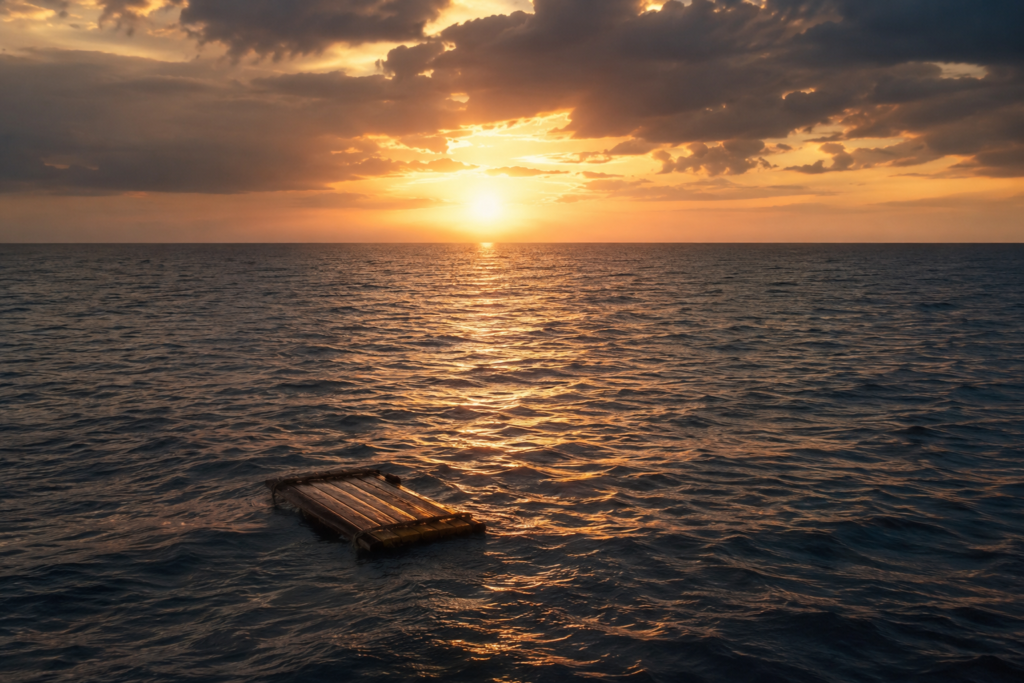
No one on this list survived longer alone than Poon Lim. He was a Chinese steward on the British merchant ship Benlomond when it was torpedoed by a German U-boat in November 1942. Lim found an eight-foot wooden raft with limited supplies. From there, he survived by fashioning fishing hooks from a flashlight spring and collecting rainwater. After a storm ruined his provisions, he even caught a bird to drink its blood. He was spotted and passed over more than once. A freighter refused to stop. A U.S. Navy plane’s marker buoy was lost in a storm. Finally, Brazilian fishermen rescued him on April 5, 1943, 133 days after the sinking. He later received the British Empire Medal. When told he held the world record for raft survival, he reportedly said he hoped no one would ever need to break it.
What these survival stories have in common
A few patterns show up again and again across these accounts:
- Every long-term survivor found some way to secure water first. Dehydration kills faster than hunger.
- Structure mattered. The Chilean miners organized shifts and roles. Poon Lim tracked time by the moon after losing count of days.
- Nearly everyone describes a stubborn refusal to accept the situation as final. It’s a mental discipline more than a single moment of heroism.
- Rescue in most cases depended on the survivor doing something active. Signaling, moving toward water, or tracking a stream all played a role, rather than simply waiting.
The takeaway
These ten survival stories span oceans, mountains, jungles, and a collapsed mine. Yet they share the same throughline: survival bought time, and time gave rescuers the chance to do their job. None of these people planned to become famous survivors. They simply refused to stop making the next small decision that kept them alive.
Which of these stories surprised you the most? Drop a comment below. And if you found this rundown worth your time, share it with someone who loves a good survival story – and subscribe for more deep dives like this one.