

Introduction
Sea levels have been rising for decades at a fairly predictable pace. In 2024, that changed. Sea levels jumped higher than scientists had projected, and it caught researchers and coastal communities off guard. This unexpected surge shows just how complex our climate system really is. It also makes one thing clear: we need better protection for the world’s most vulnerable coastlines, and we need it soon.
In this post, we’ll look at why the surge happened, what it means globally, and what can actually be done about it.
Why Sea Levels Jumped in 2024
Global sea levels rose by 0.23 inches (0.59 cm) in 2024. That’s well above the projected 0.17 inches (0.43 cm). So what changed?
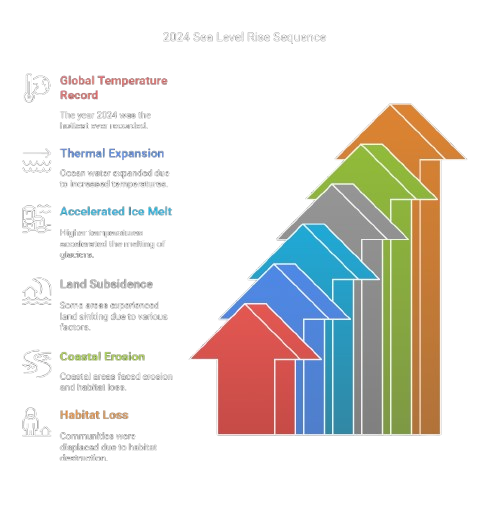
Mostly, it comes down to thermal expansion. Ocean water expands as it warms, and that alone accounted for roughly two-thirds of the rise. That’s a shift from previous years, when melting ice sheets and glaciers were the biggest contributors.
What’s Driving the Surge
A few factors combined to create this spike. Here’s what’s behind it.
A record-breaking hot year. 2024 was the hottest year ever recorded, with average global temperatures 1.28°C (2.3°F) above the 20th-century average. That extra heat caused ocean water to expand further, pushing sea levels up even more.
Faster ice melt. Higher temperatures sped up the melting of glaciers and polar ice sheets. All that extra meltwater flows straight into the ocean.
Sinking land. In some coastal regions, the land itself is sinking. Groundwater extraction and tectonic shifts are making local sea level rise feel even worse than the global average.
The Global Impact
Faster sea level rise doesn’t stay abstract for long. Here’s what it looks like in practice.
Coastal erosion. In Ghana, powerful waves have already torn apart homes, eroded coastlines, and displaced entire communities.
More frequent flooding. Low-lying areas of Hawaii are flooding more often, and more severely, putting infrastructure and livelihoods at risk.
Rising costs. Governments and local communities are spending more on coastal defenses and disaster response every year.
Mitigation and Adaptation Strategies
Solving this problem takes more than one approach. Here are the main strategies researchers and coastal cities are pursuing.
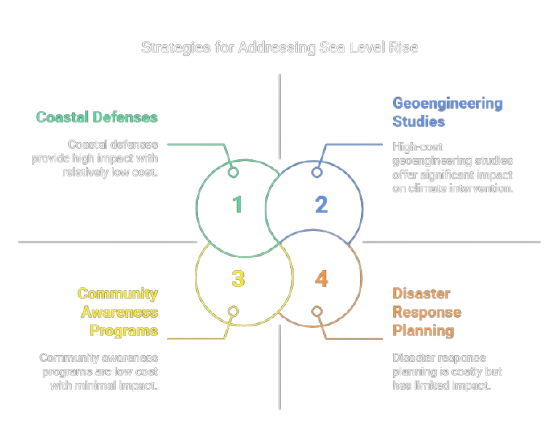
Supporting climate research. Scientists are studying interventions like solar radiation management and Arctic refreezing to help slow long-term warming trends.
Building coastal defenses. Sea walls, restored mangroves, and smarter urban planning can protect at-risk regions from encroaching water.
Cutting emissions. Shifting to renewable energy and improving energy efficiency remain the most direct ways to slow future warming.
Conclusion
The sharp rise in sea levels in 2024 is a reminder that our climate system doesn’t always change in a straight line. It underscores how urgently coastal communities and ecosystems need protection. Staying informed, supporting scientific research, and backing sustainable practices are all part of navigating what comes next.
Keep Reading
Want more science explainers like this one? Browse our Science category for more.